The Bahamas Applies to UN Programme on AI and Disaster
The Ministry of Innovation and National Development has submitted an expression of interest for The Bahamas to take part in a new United Nations programme on the use of artificial intelligence to reduce disaster risk, following the Minister’s participation in the programme’s launch at the United Nations General Assembly.
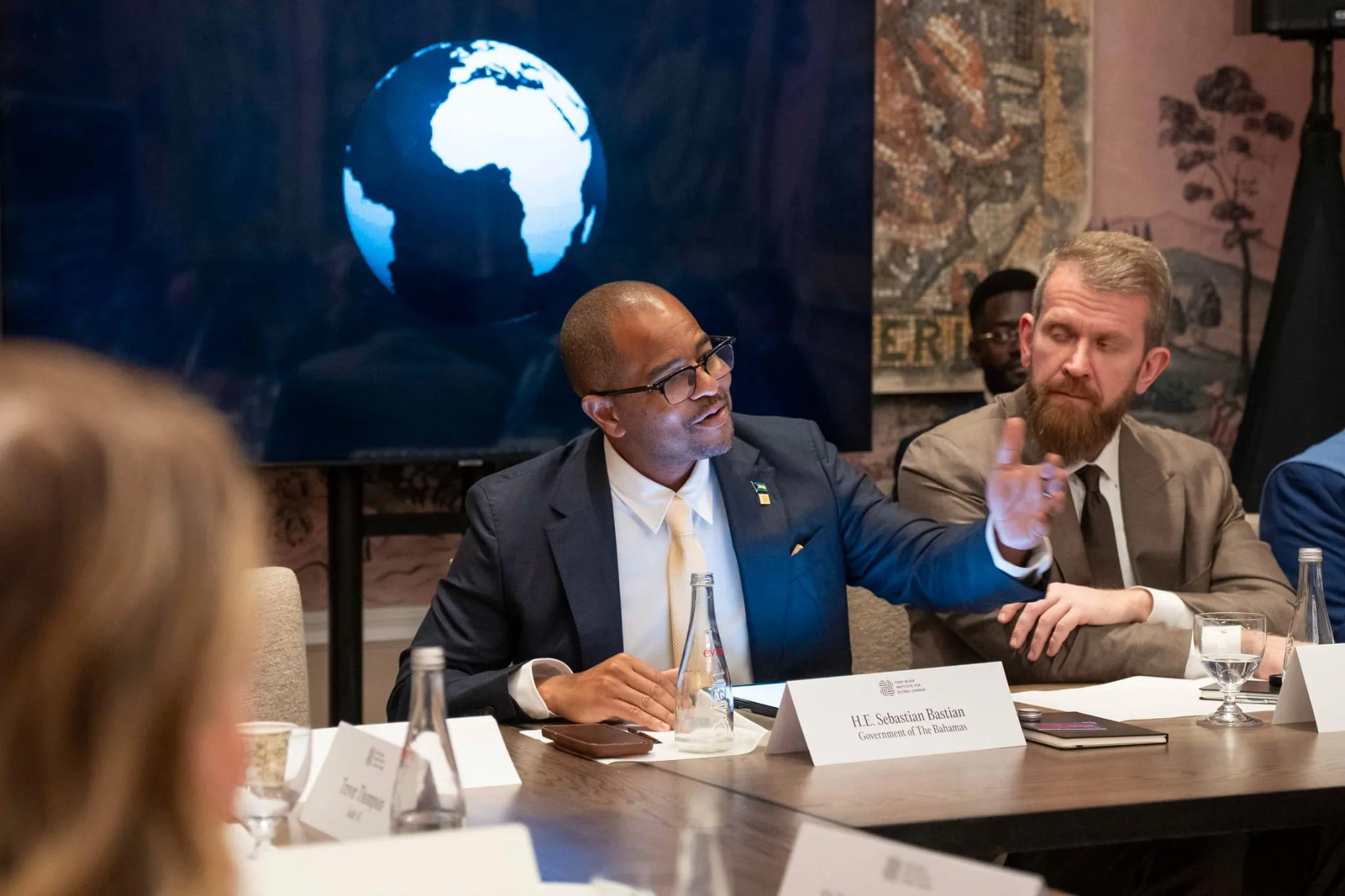
The partnership between the UN Office for Digital and Emerging Technologies (UN-ODET) and the UN Office for Disaster Risk Reduction (UNDRR) was launched on 21 September at UN Digital Cooperation Day in New York. It aims to apply artificial intelligence responsibly across the disaster risk reduction cycle, from understanding risk and issuing early warnings through to response, recovery and reconstruction. The Hon. Sebastian J. D. Bastian, MP, Minister of Innovation and National Development, took part in the launch session, “Technology at the Frontlines of Disaster Resilience,” as a panelist.
“When Dorian struck in 2019, government offices were destroyed, evacuated families were left without identification documents, and the damage ran to US$3.4 billion, more than a quarter of our economy,” Bastian said. “This new UN programme will help us test the tools that can address the unique challenges we face during disasters as an archipelagic nation. Can we warn Bahamians sooner, render aid faster and recover more quickly after a storm? With new technologies as tools, that is what we are aiming for.”
If The Bahamas is selected, the Government would work with the United Nations on practical applications of artificial intelligence in disaster management, in four areas: ● Earlier and better warning, including forecasting that reaches every inhabited island, not only the most populated ones. ● Faster damage assessment after a storm, so that relief and repair can be directed to where the need is greatest. ● Getting help to people quickly, by connecting assistance to verified identity so that Bahamians who have lost their documents are not left waiting to prove who they are. ● Keeping government running, so that essential public services continue when the islands they are delivered from are disrupted.
The Ministry has also made clear that any cooperation must build capability inside The Bahamas. Training for Bahamian technical staff and public officers forms part of what the Government is seeking, alongside data-sharing arrangements consistent with Bahamian law and under Bahamian control.
The Disaster Risk Management Authority leads the country’s preparation for and recovery from disaster and would lead operationally on any work arising from the programme, supported by the Department of Meteorology and the Ministry of Innovation and National Development.
“The Authority’s job is to protect people before, during and after a disaster, and we will use every tool that makes us better at it,” said the Hon. McKell Bonaby, Minister of State in the Office of the Prime Minister with responsibility for the Disaster Risk Management Authority. “Technology does not replace preparation, shelters or the people who do this work. But better forecasting, faster assessment and a clearer picture of who needs help and where, all of that saves time. In a disaster, time is the difference between a family waiting and a family recovering. We welcome this partnership with the Ministry of Innovation and National Development and we welcome the support of the United Nations.”
The Ministry expects to begin technical discussions with UN-ODET and UNDRR in the coming weeks, and will report publicly on progress.